What the New Fed Chair Could Mean for Rates, Real Estate, and the Next Investment Cycle
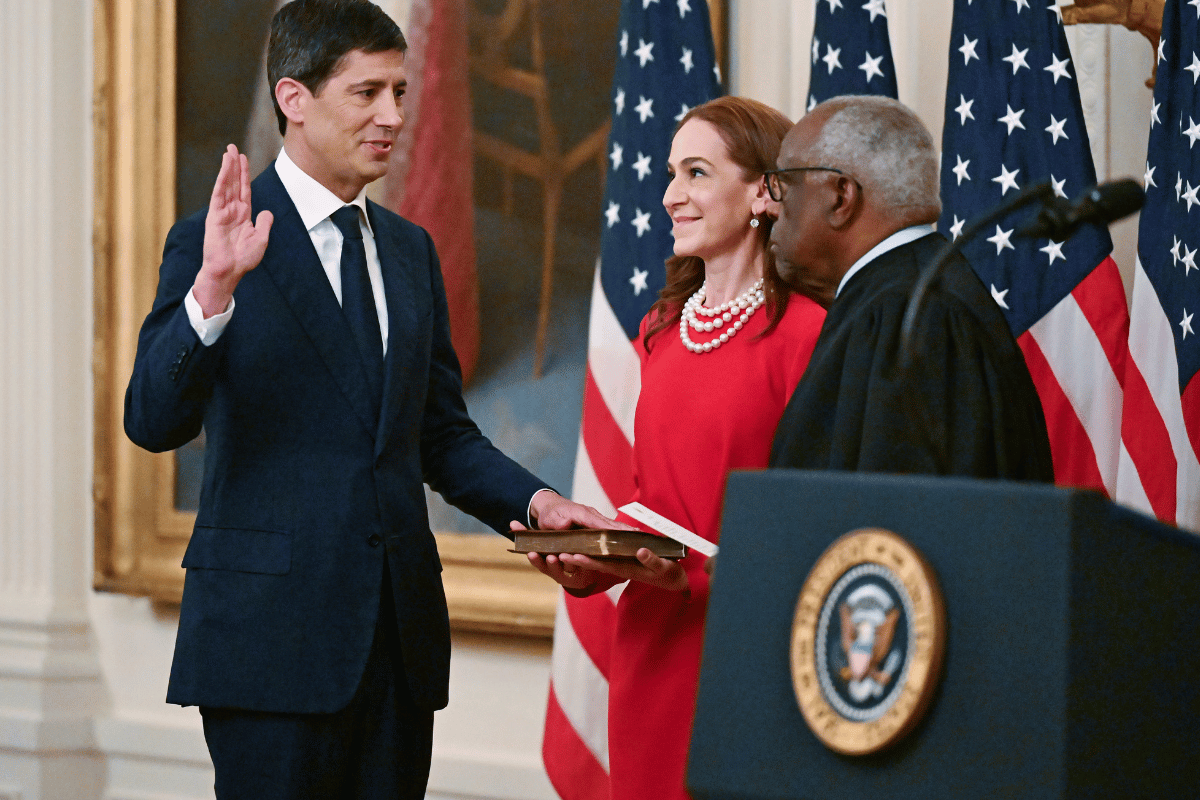
Kevin Warsh was sworn in today as the new Chair of the Federal Reserve. That milestone marks a meaningful transition point for monetary policy and provides a timely moment to step back and assess what this leadership change could mean for interest rates, inflation, and the broader investment environment.
The Federal Reserve rarely changes leadership during periods of economic certainty.
More often, transitions happen when markets are searching for direction, inflation remains unresolved, and investors are trying to determine whether the next phase of the cycle will bring stabilization or renewed volatility.
That is the environment Warsh now steps into.
For investors, the significance goes far beyond headlines. Leadership at the Fed directly influences the cost of capital, the direction of interest rates, and ultimately the valuation environment across commercial real estate.
Many initially expected a quicker path toward lower rates over the next 12 to 18 months. Recent market behavior, however, suggests the path forward may be more gradual and more complex.
A Fed Chair Entering at a Difficult Moment
Warsh inherits one of the most complicated economic backdrops in recent memory.
Inflation has moderated from its peak but remains persistent in several areas of the economy. Treasury yields have continued climbing. Energy volatility and broader global uncertainty remain elevated. At the same time, the labor market has remained relatively resilient despite years of tightening monetary policy.
The result is an economy sending mixed signals.
Markets are looking for clarity on future rate policy.
The Federal Reserve remains focused on maintaining long-term inflation stability.
Investors are increasingly realizing those objectives may not align as quickly as many had hoped.
Warsh has spent years publicly discussing the long-term implications of aggressive monetary stimulus, prolonged accommodative policy, and balance sheet expansion following the 2008 financial crisis.
That matters because his leadership style appears focused on long-term monetary credibility and measured policy decision-making.
In practical terms, that could mean:
- higher rates for longer,
- slower and more measured cuts,
- continued pressure on long-duration assets,
- and a greater emphasis on economic fundamentals over financial engineering.
The Market May Be Underestimating the “Higher for Longer” Reality
One of the more important dynamics unfolding today is the growing disconnect between investor expectations and bond market behavior.
While many continue anticipating a rapid easing cycle, long-term Treasury yields have continued pushing higher. Inflation expectations remain elevated in several areas of the economy, and policymakers continue signaling caution around premature easing.
The broader message is becoming increasingly difficult to ignore:
The ultra-low interest rate environment that defined much of the last decade may not be returning anytime soon.
For commercial real estate, this shift is substantial.
The previous cycle rewarded aggressive leverage, appreciation assumptions, and inexpensive refinancing. The emerging cycle may reward something very different:
- operational discipline,
- durable cash flow,
- conservative debt structures,
- and long-term rate certainty.
That distinction is becoming increasingly important as sponsors position assets for long-term performance rather than short-term market timing.
Why Debt Strategy Matters More Than Ever
In prior cycles, floating-rate exposure and short-term financing structures often appeared manageable because markets largely assumed rates would normalize quickly.
Today, that assumption carries far more risk.
As capital markets continue adjusting to a structurally different interest rate environment, sponsors who secured long-term financing stability may find themselves in a materially stronger position moving forward.
At RSN, this has been a major point of focus throughout our recent acquisitions strategy.
When we secured Bristol Park, one of the most important components of the transaction was locking in long-term agency debt at 5.04%, creating certainty around financing costs at a time when many investors continue facing uncertainty surrounding future rate movements.
That decision was not simply about current rates.
It was about positioning the asset for durability across multiple economic scenarios while maintaining operational flexibility moving forward.
In uncertain environments, predictability itself becomes a strategic advantage.
A Shift Toward Operational Fundamentals
The commercial real estate environment ahead may increasingly separate operationally disciplined sponsors from those who relied heavily on market momentum during the prior cycle.
As the cost of capital remains elevated:
- collections matter more,
- occupancy stability matters more,
- expense management matters more,
- and execution matters more.
The era of inexpensive capital often allowed operational inefficiencies to remain hidden beneath appreciation and refinancing.
This next phase of the market may reward something much more durable: strong real estate operated efficiently and conservatively.
For multifamily specifically, assets supported by demographic migration, workforce demand, and resilient local economies may continue outperforming despite broader volatility in capital markets.
The Bigger Picture
The deeper story surrounding Kevin Warsh may not simply be whether the Fed cuts rates this year or next.
The deeper story may be that markets are beginning to adjust to a fundamentally different monetary environment.
An environment where:
- capital is no longer exceptionally cheap,
- volatility becomes more normalized,
- liquidity becomes more selective,
- and disciplined underwriting regains importance.
For investors, that transition creates challenges.
But it also creates opportunity.
Periods of uncertainty often reward operators who focus less on speculation and more on structure, execution, and long-term positioning.
That mindset is becoming increasingly important as we move deeper into the next phase of the cycle.
Final Thought
The Federal Reserve cannot eliminate economic cycles. It can only influence the conditions surrounding them.
Kevin Warsh now assumes leadership at a moment when inflation, interest rates, and investor expectations remain closely connected.
The challenge ahead is not simply whether rates move higher or lower.
The challenge is whether policymakers can restore long-term stability while preserving economic momentum in a changing environment.
For commercial real estate investors, the takeaway may be straightforward:
In uncertain markets, disciplined operations and disciplined capital structures matter more than ever.

Reed Goossens is an Australian-born real estate entrepreneur, investor, author, public speaker, and an all-around good bloke. Reed got his start in real estate investing back in 2012 when he moved to the US.