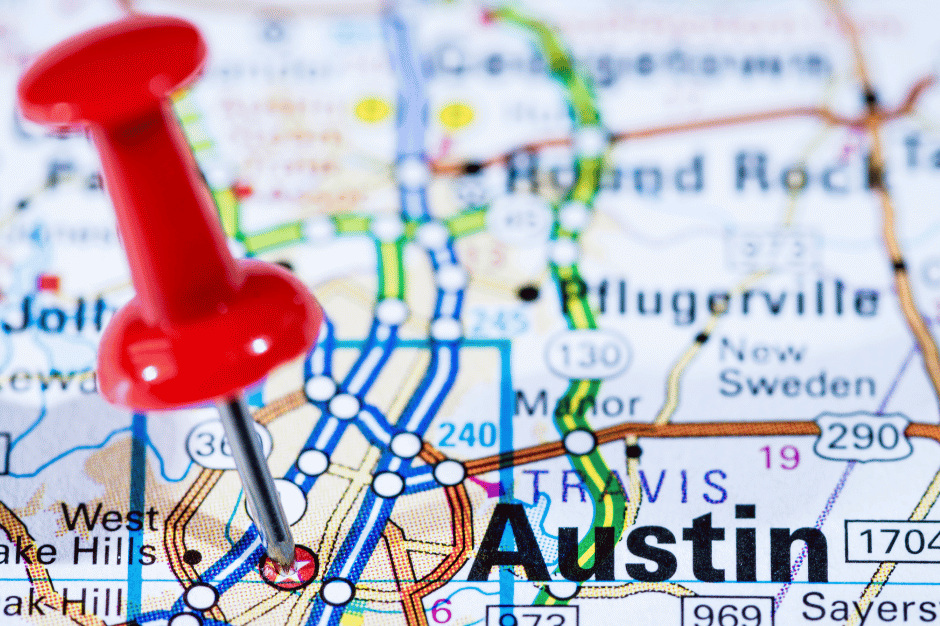
“Boomtown to Exodus: Austin’s Rapid Rise and Fall” – sounds like the kind of headline that would make any Austinite choke on their Franklin BBQ, doesn’t it? With the recent surge of articles criticizing Austin’s growth and challenges, it’s time we tackle these issues head-on and separate fact from fiction before you have the chance to roll your eyes and mutter “fake news” under your breath.
Austin, that quirky oasis of live music, tech innovation, and “Keep It Weird” bumper stickers, has been on quite the roller coaster ride lately. From Silicon Hills to silicon valleys of traffic, the city’s growth spurt has been nothing short of spectacular – and spectacularly complicated. But is the party really over, as our clickbaity title suggests? Or is Austin simply entering its awkward teenage years, complete with growing pains and an identity crisis?
Austin’s Transformation: From Emerging Market to Established Player
Austin’s transformation is tangible: from a booming hotspot to a mature city, it’s grown up right before our eyes. Gone are the days when the city’s housing market surged, climbing $170,000 during a pandemic-driven frenzy. Now, prices are easing back, with a notable 9.5% dip per square foot. While the job market is still solid, boasting a low 3.4% unemployment rate, the slower population growth signals an evolution beyond the early bet phase.
Riding the Wave: How Austin’s Maturity Impacts Business Opportunities
Austin may no longer be the scrappy upstart everyone was buzzing about but don’t think for a second that means the party’s over. Think of it this way: Austin’s gone from a rowdy teenager to the cool uncle who still knows how to have a good time. While this shift has reshuffled the deck for investors and entrepreneurs, it’s less about throwing darts at a board and hitting gold and more about playing smart in a city that’s grown up but hasn’t lost its edge.
So, what’s hot in ATX these days? Tech is still king, with startups like Grocery TV and Ownwell leading the pack in 2024. But it’s not just about coding anymore. Real estate is still on fire, with mixed-use developments becoming the norm. And get this – even baby food is making waves, with Serenity Kids crushing it as one of the city’s fastest-growing businesses with nutrient-packed goodies for the little ones. The secret sauce? Austin’s blend of established wealth, fresh talent, and a “weird” culture keeps things interesting, whether you’re looking to invest in property, back the next big startup, or launch a venture.
The Early Bird Gets the Profit: Lessons from Austin’s Real Estate Evolution
Remember when Austin was the golden child of real estate? In 2024, its median home price hit $586,000, growing at a modest 3.7% year-over-year. Nice, but nothing like the rocket ship it once was. With 3.8 months of inventory, Austin’s market has cooled from red-hot to stabilized. The early birds who swooped in years ago? They’re sitting pretty. But for new investors hoping to catch that lightning in a bottle, they’re about 10 years too late to the party.
Austin’s real estate journey shows us the difference between an emerging market and an established one. An emerging market, like Austin was a decade ago, offers the potential for explosive growth – the kind that could double property values overnight. It’s a high-risk, high-reward scenario where early investors can reap enormous benefits if they time it right. On the flip side, an established market like Austin today presents a different proposition. It’s a market with a clear, long-term growth trajectory that’s more modest but far more predictable.
Markets like Greenville, SC, reflect where Austin was before its boom. Back in 2022, we at RSN acquired Pelham Place North and South, seeing the potential before the crowd. Fast forward to 2024, and Greenville’s market mirrors Austin’s early days. Home prices have jumped 13.9% in a year, hitting $455,000. The city also pulls in 19 new residents daily, with projections of 222,000 more by 2040.
Economic Dynamics: Cost Increases and Population Growth
As Austin deals with its new, mature status, residents and policymakers alike face the complex realities of rapid growth, from soaring costs to changing migration patterns. But is the city really hemorrhaging people, or is there more to the story?
Austin’s Population Puzzle: Are People Really Fleeing the Capital City?
You’ve probably heard the buzz: “Everyone’s leaving Austin!” But hold your horses because the numbers tell a more nuanced story. Sure, Travis County saw more people move out than in between July 2022 and July 2023 for the first time in two decades. And yes, Austin’s now the fifth-ranked U.S. city for outbound moves. But here’s the plot twist – despite this departure, the county’s population actually grew by 7,000 people in the same period from births, not moving trucks.
That said, it’s no secret that Austin’s not the bargain it used to be. Home prices skyrocketed 53% between 2019 and 2023, and rents aren’t far behind. Throw in some tech industry layoffs, and you have a recipe for restless natives. But let’s keep perspective. While more people are leaving than arriving, Austin’s still growing. It’s just growing differently.
Austin’s Expansion and Suburban Sprawl: A Tale of Two Cities Merging
Austin’s population hit 984,567 in 2024, jumping nearly 2% since 2020. But here’s the kicker – as the amount of people flocking to the Texas capital slows on the surface, the reality is that instead of squeezing into downtown apartments, they’re spreading out into the suburbs. Why? When the average Austin household is raking in $122,474 a year, the poverty rate sits at 12.43%, and a typical home costs over $580,000, something has to give. Affordability is a genuine issue, and that’s why suburbs like Georgetown are growing at a mind-boggling 14.4% clip.
Now, here’s where it gets really interesting. As Austinites push outward, seeking affordability, and San Antonio does the same, these two Texas titans are starting to bump elbows. The space between them is filling up fast, creating what some call a “mega-metro” or “San Antonio-Austin metroplex.” It’s not just about housing, either. Businesses are setting up shop all along this corridor, turning the area between the Alamo and the Capitol into one giant business center poised to rival any other in the United States.
Future Outlook: Growth and Urban Evolution
From a sleepy college town to a burgeoning metropolis, Austin’s transformation has been nothing short of remarkable. What lies ahead as the Texas capital stands at the precipice of becoming a mature city? Will its future be as bright as its boosters claim, or will growing pains temper its ascent?
Austin’s Booming Future: Population Explosion and Job Bonanza
All things considered, Austin’s trajectory could redefine the city as you know it. By 2040, the population could hit 4.5 million – a staggering leap from where it stands today. Through 2060, you could also see the population grow by a total of 70.6%. Meanwhile, looking at the bigger picture, the Austin-San Antonio corridor is poised to become an economic powerhouse, potentially adding three million more residents by 2050.
The job market is gearing up to match this growth, with forecasts predicting 350,000 new positions by 2040. If you’re in trade, transportation, hospitality, or professional services, sectors primed for expansion, you’re in a sweet spot. However, fields like construction, information, and manufacturing might face some headwinds.
Rising Costs Don’t Destroy Cities: They Change Them
Another thing to consider as Austin matures? Rising costs are changing Austin, much like they’ve reshaped other major cities across the US. It’s not all doom and gloom, though. Sure, your wallet might feel a bit lighter, but there’s a silver lining to this cloud of higher prices. With more money flowing into city coffers, Austin is getting a makeover, aligning with established urban giants like NYC, LA, and Phoenix.
Take the proposed water rate hike, for example. Yeah, it stings to see your bill go up by 9.5%, but that extra cash is going toward upgrading the Walnut Creek Treatment Plant. It’s not the sexiest project, but it’s crucial for keeping Austin’s water clean and flowing. And let’s talk taxes – the typical homeowner’s looking at a $25.91 bump in their 2024 tax bill. It’s not chump change but helping fund the services that make Austin tick.
Businesses are feeling the pinch, too, with commercial rates potentially jumping by 22.7%. It’s a balancing act, for sure, but it’s part of Austin’s growing pains as it steps up to play in the big leagues with cities like New York, where living costs are still a whopping 33.6% higher than ATX. It’s a wild ride, but that’s the price of progress.
Final Words: A City Reimagining Its Future
The rumors of Austin’s demise have been greatly exaggerated. Far from experiencing an exodus, the Texas capital is simply undergoing a natural evolution. Cities grow, change, and adapt to new circumstances like living organisms, and Austin is no exception. Sure, many have left, but a deeper look at the trends and data reveals a city in evolution, not exodus.
Challenges like affordability and growing pains are real, but so is Austin’s determination to tackle them. The spirit that made the city a magnet for dreamers and doers is alive and well, from food trucks to startups. As Austin writes its next chapter, we aren’t mourning what was but looking forward to what’s to come.
Happy investing!

Reed Goossens is an Australian-born real estate entrepreneur, investor, author, public speaker, and an all-around good bloke. Reed got his start in real estate investing back in 2012 when he moved to the US.